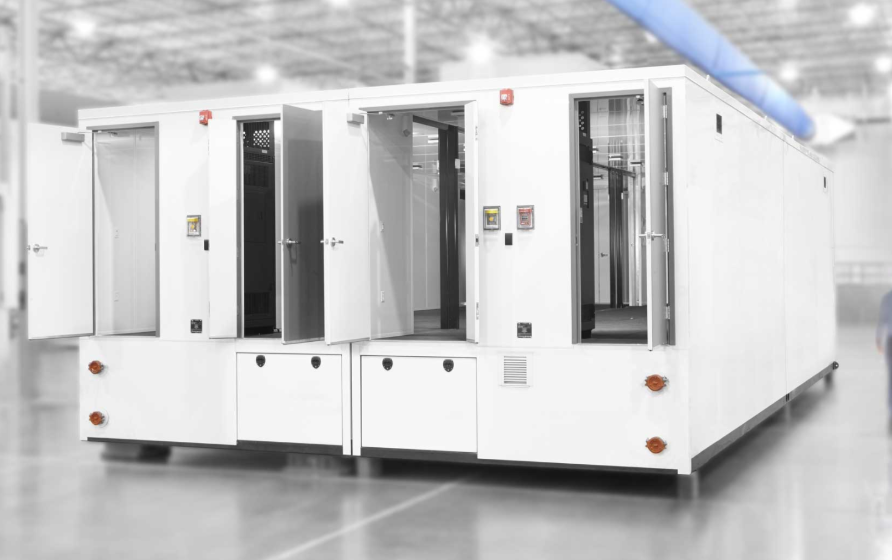

In today’s fast-paced digital landscape, businesses and organizations are generating and consuming unprecedented amounts of data. Traditional data centers, with their fixed infrastructure, can struggle to keep pace with this rapid growth. Enter the modular datacenter, a flexible, scalable, and cost-effective solution designed to meet modern IT demands.
What is a Modular Datacenter?
A modular datacenter is a pre-fabricated, standardized data center system that can be deployed quickly and expanded as needed. Unlike traditional data centers that require significant upfront construction, modular datacenters are built using prefabricated modules that integrate computing, storage, and networking components within a compact and efficient unit. These modules can be deployed on-site, transported to remote locations, or even stacked together to create a larger facility.
See also: Energy Efficiency Solutions For Modern Homes
Key Components of a Modular Datacenter
- Compute Modules: These contain servers, storage units, and networking equipment, designed to handle workloads efficiently while maintaining optimal power and cooling efficiency.
- Power and Cooling Systems: Advanced power distribution and cooling solutions ensure energy efficiency and reliability, even in high-density environments.
- Security Systems: Physical and digital security measures, including surveillance, biometric access, and fire suppression, are integrated into modular designs.
- Networking Infrastructure: High-speed connectivity and redundancy ensure seamless communication between modules and external networks.
Advantages of Modular Datacenters
1. Scalability
One of the most significant advantages of modular datacenters is their scalability. Organizations can start with a single module and add more modules as demand grows. This eliminates the need for costly over-provisioning.
2. Rapid Deployment
Unlike conventional data centers that may take months or even years to build, modular datacenters can be deployed in weeks. Their prefabricated design allows for faster installation and integration, reducing downtime and accelerating time-to-market.
3. Cost Efficiency
By standardizing components and leveraging mass production, modular datacenters reduce both capital expenditure (CapEx) and operational expenditure (OpEx). They also lower energy costs through optimized power and cooling systems.
4. Flexibility and Portability
Modular datacenters can be relocated, reconfigured, or expanded with ease. This flexibility makes them ideal for industries that experience fluctuating workloads or need temporary solutions for specific projects.
5. Sustainability
Energy-efficient cooling systems, reduced physical footprint, and optimized resource usage contribute to a smaller carbon footprint, aligning with corporate sustainability goals.
Applications of Modular Datacenters
- Enterprise IT: Businesses can quickly expand their IT infrastructure without the burden of traditional construction.
- Telecommunications: Telecom operators leverage modular solutions to support network expansion and edge computing.
- Disaster Recovery: Rapidly deployable modules serve as backup facilities during emergencies or outages.
- Edge Computing: Modular datacenters placed near data sources reduce latency and improve service delivery for IoT, AI, and real-time applications.
Challenges of Modular Datacenters
While modular datacenters offer numerous advantages, they are not without challenges:
- Initial Planning: Proper site evaluation and network integration are crucial to avoid operational bottlenecks.
- Limited Customization: Pre-fabricated modules may offer less customization compared to fully bespoke data centers.
- Transport Limitations: While portable, very large modules can face logistical challenges in certain terrains.
FAQs About Modular Datacenters
Q1: How long does it take to deploy a modular datacenter?
A modular datacenter can typically be deployed within weeks, compared to months or years for traditional facilities.
Q2: Are modular datacenters energy-efficient?
Yes, they are designed with advanced cooling and power systems that optimize energy usage, making them highly energy-efficient.
Q3: Can modular datacenters be expanded?
Absolutely. Modules can be added or removed based on business needs, offering seamless scalability.
Q4: Where are modular datacenters commonly used?
They are used in enterprise IT, telecommunications, edge computing, and disaster recovery scenarios.
Q5: Do modular datacenters support high-density computing?
Yes, modular designs are optimized for high-density workloads, ensuring efficient cooling and power management.
Conclusion
The modular datacenter is transforming the way businesses approach data management and IT infrastructure. Offering rapid deployment, scalability, energy efficiency, and flexibility, modular solutions address the challenges of modern computing environments while reducing costs and operational complexity. As data demands continue to grow, modular datacenters will remain a critical tool for organizations seeking agile, sustainable, and future-proof IT infrastructure.